Art as a Medium For Life: The Death of New York’s Artistic Scene
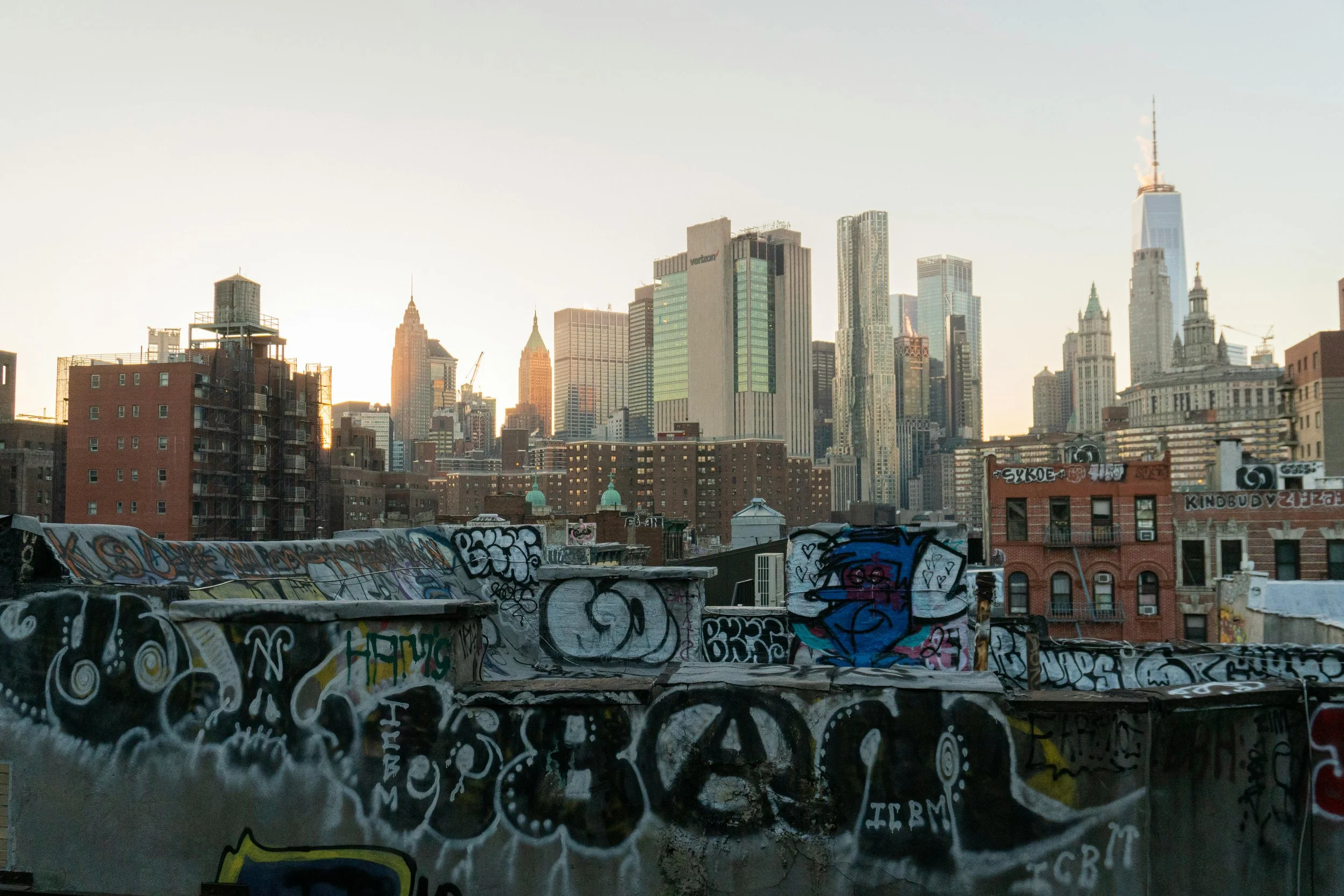
New York City’s skyscrapers were built on the backs of those who sought something more. And the art we consume is imagined by those who longed for a world bigger than their own.
Art is using the known to describe the unknown, and in that sense, we all know nothing. Art is the realization of the soul. A beat. A scribble. A word. A lifeform that houses the lived experience of humans all over the world. And that organism lies to rest here in New York City. New York is full of art, reflected in the colors pooling in our irises and the sounds permeating through our concrete walls. We see this art through the architecture of the Chrysler, the subway buskers on 34th, and the graffiti on our white trucks. The artists living in this city built up a culture and life that never takes and only seeks to share. People come to New York from all over the world to learn something new and experience something different, and the artistic culture here in the city is what allows for that growth. But what once felt like a city for all is deteriorating into a city only for some.
When I first learned how to play the piano, my fingers were slipping against the keys, and my hand could barely cover an octave. I would push all my piano keys up and down and imagine the sort of music I could make. I would play over the recording of the Moonlight Sonata as if I could make something better, and record my improvisations through the speakers of my iPhone 4. I thought hard about how I was the only person ever to play a specific set of notes, and I dreamed of one day making my own songs. They say that creativity starts dying around the age of six, aligning with the time kids start formal and structured education. As I grew older, and the pressure for me to be good at the piano grew, I forgot what it felt like to improvise, just as I forgot what it was like to be creative.
Art is not meant to be practical: it’s meant to be creative. That dissonance is being shown through the way people are perceiving the arts today, especially on an educational level.
Historically, New York was meant to be a sanctuary for creatives all over the world. This city is the birthplace of the Harlem Renaissance in the 20th century, the focal point of Jazz, the home of the New York Times, and an outlet for wandering creatives looking for a new home. The Statue of Liberty has been photographed from every angle imaginable, from every lens known to man. The same street we walk on now has been walked on by the greats of every century in modern history. We live within an ecosystem where creativity has historically been the centerpiece, but there have been visible gaps in that process on both an educational and societal level.
New York’s creative cycle starts with the aggregation of worldwide creative talent from all over the world through an impressive set of arts and music conservatories. Schools like Juilliard, Manhattan School of Music, NYU Tisch, Fashion Institute of Technology, and the New School are all examples of such. Using Tisch as a visual, their cost of attendance in the latest school year (2025-2026) is 134% of the price it was back a decade ago (CollegeTuitionCompare, 2025). The cost of attendance is a combination of tuition and living costs. This shows an institutional gap; not only have the arts become more unaffordable, it is also historically a selective industry. Those who want to be artists have to have been good at art to begin with in order to pursue it as a career. But that’s difficult, as many generational talents are being hidden by the high financial barrier required to pursue the arts.
When children are asked where they see themselves ten years from now, many speak of reaching for the stars, immersing themselves in the colors, or creating the sounds of our world. They hope to be creative, and most importantly, happy. But as they grow older, and children grow into teens, and eventually into adulthood, those dreams become something of an afterthought. These children grow into an idea that pushes them to be practical. Many lose the artistic touch that once defined them and choose to pursue something “realistic”.
Those who do eventually decide to pursue the arts were the ones with some sort of institutional support. The cost of choosing to go to a conservatory or arts institute is something many can’t justify. On average, aspiring artists pay over 60,000 a year to pursue a creative education (Bouchrika, 2026). This filter for entry into the creative entry has destroyed the features that make New York’s, or any, creative space so special— the diversity. If socioeconomic status is such a defining factor in a person’s success, then many of those successful would be the same who had money or support in their childhood. The best forms of art are the ones that speak to the people, all the people. For people of all socioeconomic backgrounds. We are destroying that diversity through this visible lack of accessibility to musical pursuits.
This lack of creative support isn’t just within higher education; it’s also incredibly prevalent amongst early-age education. Many educational systems are shifting away from creative course offerings. In recent years, due to budget constraints, many arts and band classes have been cut out of schools nationwide. In 2019, a report by the Arts Education Status Project (AESP) claimed that over 2 million students in the U.S. don’t have access to any form of the arts. With recent government funding cuts to education, many classes deemed “unnecessary”, such as the arts, have been cut further (Morrison et al., 2022). Over 30% of parents are now claiming that their children aren’t offered as many creative opportunities as they used to in high school (Baker, 2012). With less exposure to creative arts and less support educationally for students to pursue this field, many children are unable to explore the arts even if they want to. New York’s creative landscape is defined by the quantity, talent, and diversity of creative perspectives. Without such, this city wouldn’t be remotely as vibrant or unique.
There have also been trends regarding where budget cuts are affecting the most. AESP’s 2019 data shows that out of U.S. schools without arts offerings, 26% were predominantly Native American, 7% were predominantly Black, and 4% were predominantly Hispanic (Mhorrison et al., 2022). There were also the three highest percentages for arts inaccessibility in lower education. Marginalized groups are being left out of the creative space, starting from a young age. As these children grow older, fewer, and fewer will opt for creative options, and the creative space will become more and more homogenous. When we think of the arts, we don’t think of one race or ethnicity, we think of diverse cultures. This inequity in creative accessibility destroys that essential diversity and undermines the very basis of what makes art so special.
One way that New York, and other cities, have been trying to rectify this issue is through local arts initiatives. One that I would like to highlight is Run Artists Run (RAR), an artist run consultancy firm that manages a database of arts grants and helps give aspiring artists and fellow aspiring arts initiatives the tools to be successful. Most artists rely on grants in order to continue their work, especially in the pre-revenue stage of their work. Grants are typically one-time and only sufficient for a short period of time. Another issue grants face is the lack of visibility they have. Most artists wind up finding grants on social media platforms way after their deadlines have passed. It’s difficult for artists to find grants when they neeed them. RAR tries to help build grant strategies for aspiring artists and organizations to plan in advance the grants they should be applying for in order to have funding all year long. Additionally, they run programming to equip artists with grant writing strategies to actually equip them with the tools to focus on their art.
But even through the efforts of organizations such as RAR, there are more institutional issues with grants. They’re simply not enough individually, and there are never enough for everyone. New York City has a native arts grants organization (DCLA) that provides aspiring arts organizations with funding. An issue that New York faces is the rising rent costs and lack of rent stabilization. Many organizations have historically been pushed out of NYC due to these rent prices. New York City annual rent prices for commercial and individual properties have jumped to over 45,000, whereas annual grants are sitting at around 37,000 (Figure 1). If we factor just commercial properties, rent sits at a much higher rate ($100/sq ft vs $40/sq ft) (Office of the New York City Comptroller, 2024). 37,000 can’t even cover rent, let alone programming. This systemic issue with rent is preventing real voices from reaching our New York streets, and despite all that grants can do, they’re not looking to be enough. We, as a community, need to spend our time trying to support arts organizations. If we can take the time to appreciate the art in a gallery, we also need to work to support the art we’re setting our eyes on. New York will not be a bystander to issues, as we have too much integrity to ignore the things we appreciate.
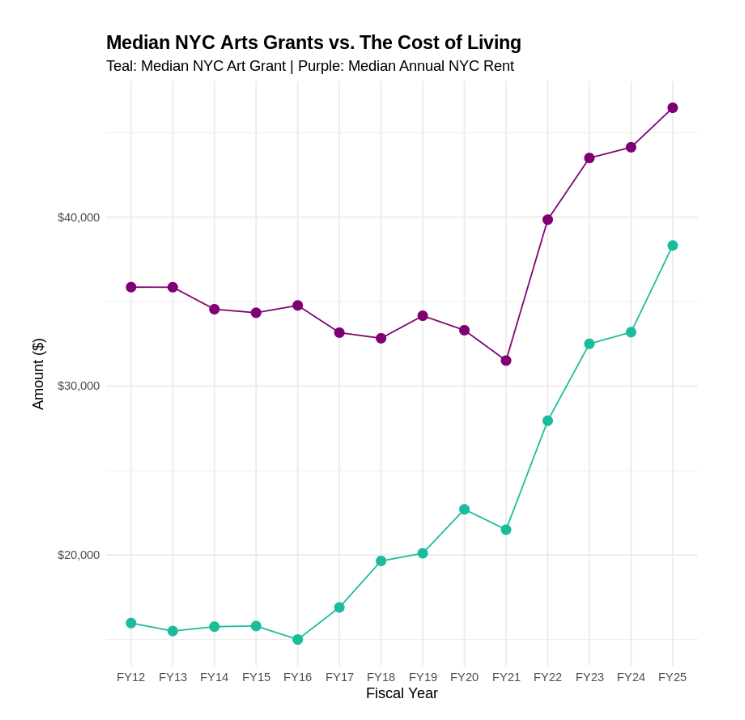
Figure 1. Median NYC Arts Grants vs Rent Prices (Annual)
But the issue isn’t just visible from the lens of those creating the art; there have also been changing expectations from those consuming art. Rent prices don’t just affect organizations trying to grow here in the city, it also affect everyone else living here. When an individual is spending an average of 37,000 dollars on rent, they have little to afford for other luxuries, and in a way, art has become a luxury to all. This is why in recent years, people have been going to concerts, the opera, and the ballet less. As Timothee Chalamet has famously said, “I don’t want to be working in ballet or opera, or you know, things where it’s like, 'hey keep this thing alive', even though no one cares about this anymore.”And in a way, he’s right. Movies are currently the most popular form of entertainment amongst youth. There are more people going to the movie than ever, more so than ballet or opera. But that isn’t because movies are “better” than the ballet or opera, it’s because people can’t afford to go to the ballet anymore.
Movies have the highest perceived value out of other forms of entertainment. Movies are also the only form of entertainment where consumers assume the price per person is below $50; for concerts, the opera, or ballet, that perceived price is in the hundreds (The Cinema Foundation, 2023). But this doesn’t mean no one cares; it just means that not many people currently have the means to afford this form of art. It is a disservice to say that no one cares for the opera or ballet or any form of art “we’re trying to keep alive.” These almost “lost” arts carry a lived experience that not many people in the audience have ever come close to seeing. Behind every step is a parent who spent hours on the road sending her child to practice. Behind every twirl are the hundreds of bruises hiding under their skin. Behind every jump is the sweat of time, energy, and care. And as the audience, we are experiencing something we’ll never experience firsthand but can only imagine through someone else’s art. The next time we hear an opera singer’s note, we need to take a moment to imagine the honey-lemon water and hours of vocal practice that took them to sound beautiful on a stage in front of us. These are not our experiences to speak on, just theirs to share.
This lack of appreciation for the arts is a byproduct of the mundanity that has seeped into our daily lives. The predictable routines that we surround ourselves with have left little room for the arts we grew up with. Another result of this is the loss of local arts stores here in the city. I used to live near a record shop called SAS Italian Records. They sold primarily Italian language CDs and vinyls to the local Italian community, but due to the rise of streaming services for music and the integration of vinyl and CDs into larger bookstores, a lot of their business has ceased. Stores like Barnes and Noble have begun to build large vinyl selections that undercut local record businesses.
This is also an issue for arts supply stores. Artists tend to frequent large chain art supply stores like Michaels or Hobby Lobby instead of local art supply stores. Many of these smaller family-owned or community-owned stores have not been able to keep up with the rising rent prices and staggering revenue shares due to the pandemic. This has led to many disappearing from New York City, leading to a gap being increasingly filled by large chain stores. This isn’t just a loss of business, it’s a loss of culture. The generational history tied to these institutions only lives in the memory of those from the past and is erased from our communities’ futures.
This semester, as a way to bring art back into my life, I signed up for weekly piano lessons at Steinhardt. I haven’t played piano in over 8 years, but the feeling of those keys against my fingers had never really faded. I showed up to the first class, and my professor was sitting there with his fingers against the keys and a brown hat that had the words “IMPROVISE” written in big letters across. Our first few lessons weren’t dedicated to learning any technical skills, nor were they dedicated to learning a new piece. He spent our lessons together teaching me how to improvise; he taught me how to create my own music. Confronting my own inability to create was daunting, but never impossible. Out of all the things he could have taught me, he taught me the most important. How to see music as creativity, and how to love playing again. And as a final parting gift, he granted me an interview for this article.
My professor’s name is Michael Richmond. He was born in 1948, and grew into a tree hugger, 2 time Grammy winner, and most importantly– an artist. He started college in the fall as a math major, and it was never difficult for him, but it was never true to him. He knew he wanted to play music. This was when his friend gave him a piece of advice that would change his life. He was advised to call the dean of a conservatory in his area for an audition, completely out of the blue and off-cycle. And so he did, and then he auditioned, and the February after he started his first semester at Temple University in Philadelphia. Temple University’s cost of attendance for the latest academic year is $59,992 for out-of-state students (U.S. News & World Report, 2025). I asked him if he would still go again, and he responded with practicality. “Unless you’re extremely talented and they have so much music inside them that they will join the New York Philharmonic and make 150,000 a year… if you kind of almost play great, then you’re going to make 50 dollars a night instead of 500, then it’s not worth it”.
He then told me a story of a saxophone player he met at a gig he once did. A kid in twelfth grade, who wanted to play music for the rest of his life. His parents couldn’t afford to send the child to a private conservatory for college, and as they were talking, he found out that their child’s favorite saxophone player is actually someone he knew. He then connected their family with that saxophone player for lessons, and encouraged the student to play, and only play, and to hold off on college. And now, once in a while, my professor still sees him advertised and recording. But this only happened because he continued to play without regard or regret, and that’s what music is. My professor still plays gigs; he shows up twice a week in a room with broken heating and talks of his luck. The luck that stems from practicing eight hours a day. A luck that grows the more he practices. The luck that has defined his life. He’s been teaching for 38 years now, and he doesn’t see quits. He encourages students to practice as much as they can, as success only comes from hard work, and he’s seen that firsthand within his own musical space. But at the end of the day, he repeats what he’s said to me the entire semester, “I still recommend choosing to [play] because it’s just so much fun”.
As questioned in the movie Flipped, or by Aristotle, are we more or less than the sum of our parts? I’ve come to believe that with art, we have no choice but to be more. We are encouraged to explore the experiences of those around us through their art. We learn what the human experience means through a song, a painting, a dance, or a sculpture. I started piano lessons in the last few months to bring back what makes art special to me. Music permeates through us all. Through the earbuds in our ears, through the sounds of the train tracks hitting the rails, and through the birds coming to life in the spring, as a city, we have to begin to see art for what it is. We should seek it, not wait for it to come to us. And we should be creative in whatever way we can because that’s the truth of our human condition.
Photo by André Eusébio from Pexels
Zihan Wang is a freshman from Brooklyn studying Finance and Sustainable Business with a minor in Computer Science. She is interested in the intersection between tech, finance, and sustainability. In her free time she loves hiking, thrifting, sewing, and going on day trips upstate!